

Logo
My IEU Logo
TR
University
President
Rector
History
Board of Trustees
Administrative Staff
Rectorate
Mission
Scholarship
Collaborations
Quality Structuring at IUE
Bylaws / Regulations
Awards
Protection of Personal Data
Gender Equality Plan
Principles and Policies
Academic
Schools
Faculties
Graduate School
Common Courses
  • Vocational School of Justice
  • Vocational School
  • Vocational School of Health Services
  • School of Applied Management Sciences
  • School of Foreign Languages
  • Faculty of Arts and Sciences
  • Faculty of Fine Arts and Design
  • Faculty of Law
  • Faculty of Communication
  • Faculty of Business
  • Faculty of Engineering
  • Faculty of Health Sciences
  • Faculty of Medicine
  • Graduate School
  • Master's Programs in Economics
  • Master's Programs in Law
  • Master's Programs in Communication
  • Graduate Programs in Business
  • Master's Programs in Logistics
  • Graduate Programs in Mathematics
  • Master's Programs in Architecture
  • Graduate Programs in Engineering
  • Graduate Programs in Psychology
  • Health Field
  • Political Science and International Relations Field
  • Master's Programs in Sustainable Energy
  • Graduate Programs in Design Studies
  • Graduate Programs in Foreign Languages
Research
Research Centers
Library
Smart Campus
Technology Transfer Office
İzmir Science Park
Continuous Education Center (EKOSEM)
Children's University
Researcher Training Coordinatorship
Ethics Committee
Teaching and Learning Center (EKOEĞİTİM)
Psychology Application and Research Center
Research Collaborations And Innovation Coordinatorship
Campus
Life at IUE
İzmir
Library
Dormitories and Accommodation
Cafes and Restaurants
Student Clubs
IUE Publisher
Disability Support Center
Health and Counseling Services
INTERNATIONAL
Contact
İzmir Ekonomi Üniversitesi
  • University
    • President
    • Rector
    • History
    • Board of Trustees
    • Administrative Staff
    • Rectorate
    • Mission
    • Scholarship
    • Collabrations
    • Quality Structuring at IUE
    • Bylaws and Regulations
    • Rewards
    • Protection of Personal Data
    • Gender Equality Plan
    • Principles and Policies
  • Academic
    • Schools/Vocational Schools
      • Vocational School of Justice
        • Vocational School of Justice
        • Department of Justice (Turkish)
        • Department of Legal Office Management and Secretariat
      • Vocational School
        • Vocational School
        • Department of Banking and Insurance (Turkish)
        • Department of Computer Programming (Turkish)
        • Department of Foreign Trade (Turkish)
        • Department of Graphic Design (Turkish)
        • Department of Interior Design (Turkish)
        • Department of Construction Technology (Turkish)
        • Department of Occupational Health and Safety (Turkish)
        • Department of Media and Communication (Turkish)
        • Department of Architectural Restoration (Turkish)
        • Department of Radio and Tv Programming (Turkish)
        • Department of Civil Aviation Cabin Services (Turkish)
        • Department of Civil Aviation Transportation Management (Turkish)
        • Department of Tourism and Hotel Management (Turkish)
        • Department of Applied English Translation
      • Vocational School Of Health Services
        • Vocational School Of Health Services
        • Department of Child Development (Turkish)
        • Department of Physiotherapy (Turkish)
        • Department of Paramedic (Turkish)
        • Department of Opticianry (Turkish)
        • Department of Medical Documentation and Secreteriat (Turkish)
        • Department of Medical Imaging Techniques (Turkish)
        • Department of Medical Laboratory Techniques (Turkish)
        • Department of Elderly Care (Turkish)
      • School of Applied Management Sciences
        • School of Applied Management Sciences
        • Gastronomy and Culinary Arts Program
      • School of Foreign Languages
    • Faculties
      • Faculty of Arts and Sciences
        • Faculty of Arts and Sciences
        • Department of Physics
        • Department of Mathematics
        • Department of English Translation and Interpreting
        • Department of Psychology
        • Department of Sociology
      • Faculty of Fine Arts and Design
        • Faculty of Fine Arts and Design
        • Department of Industrial Design
        • Department of Visual Communication Design
        • Department of Interior Architecture and Environmental Design
        • Department of Architecture
        • Department of Textile and Fashion Design
      • Faculty of Law
      • Faculty of Communication
        • Faculty of Communication
        • Department of Public Relations and Advertising
        • Department of Cinema and Digital Media
        • Department of New Media and Communication
      • Faculty of Business
        • Faculty of Business
        • Department of Economics
        • Department of Business Administration
        • Department of Logistics Management
        • Accounting and Auditing Program
        • Department of Political Science and International Relations
        • Department of International Trade and Finance
      • Faculty of Engineering
        • Faculty of Engineering
        • Department of Computer Engineering
        • Department of Biomedical Engineering
        • Department of Electrical and Electronics Engineering
        • Department of Industrial Engineering
        • Department of Food Engineering
        • Department of Genetics and Bioengineering
        • Department of Aerospace Engineering
        • Department of Civil Engineering
        • Department of Mechanical Engineering
        • Department of Mechatronics Engineering
        • Department of Software Engineering
      • Faculty of Health Sciences
        • Faculty of Health Sciences
        • Department of Physiotherapy and Rehabilitation
        • Department of Nursing
        • Department of Health Management
        • Department of Nutrition and Dietetics
      • Medicine
    • Graduate School
    • Common Courses
  • Research
    • Research Centers
    • Library
    • Smart Campus
    • Technology Transfer Office
    • İzmir Sciencepark
    • Continuous Education Center (EKOSEM)
    • Children's University
    • Ethics Committee
    • Teaching and Learning Center (EKOEĞİTİM)
    • Psychology Application and Research Center
    • Researcher Training Coordinatorship
    • Research Collaborations And Innovation Coordinatorship
  • Campus
    • Life at IUE
    • İzmir
    • Library
    • Health and Counseling Services
    • Dormitories and Accommodation
    • Cafes and Restaurants
    • Student Clubs
    • Disability Support Center
    • IUE Publisher
  • INTERNATIONAL
  • Contact
  • TÜRKÇE

  • Prospective Student | Student | Alumni

      Search Results...

      DAVID HARVEY HONORED IZMIR UNIVERSITY OF ECONOMICS
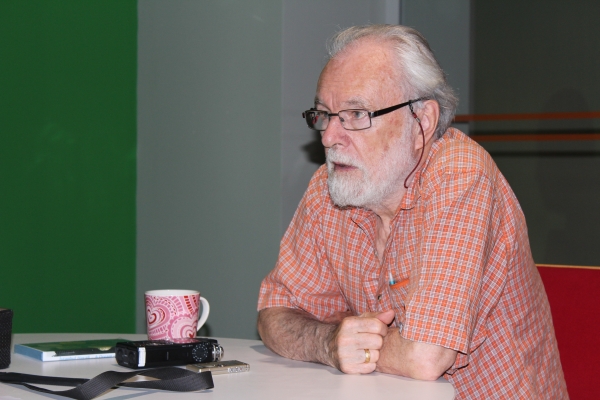
      20 OCTOBER 2014

      DAVID HARVEY HONORED IZMIR UNIVERSITY OF ECONOMICS

      DAVID HARVEY İZMİR EKONOMİ ÜNİVERİTESİ'Nİ ONURLANDIRDI While the 2008 global crisis continues to affect the economies of rich countries, some of the most influential political economists got together in Izmir to discuss about its causes.  A four day workshop held in the Izmir University of Economics brought together 15 researchers some of which are the most renowned political economists such as David Harvey, Ben Fine, John Weeks, Anwar Shaikh, Simon Mohun, David Kotz, Alan Freeman, Al Campbell and Riccardo Bellofiore.

      Professor Turan Subaşat from economics depart of Izmir University of Economics, as the organizer of the workshop has stated that the results of the discussions will be edited in a volume which will be published by the Edward Elgar.

      “The workshop has been very helpful for me”
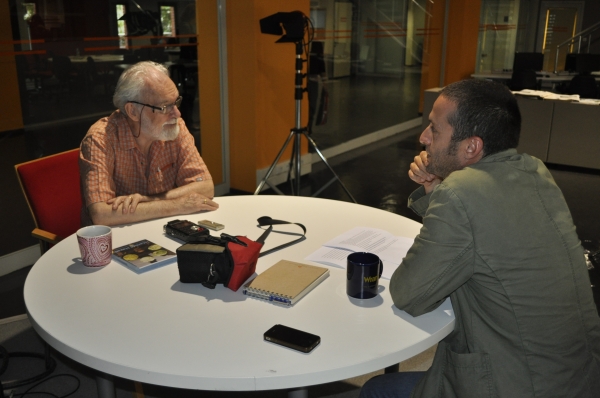
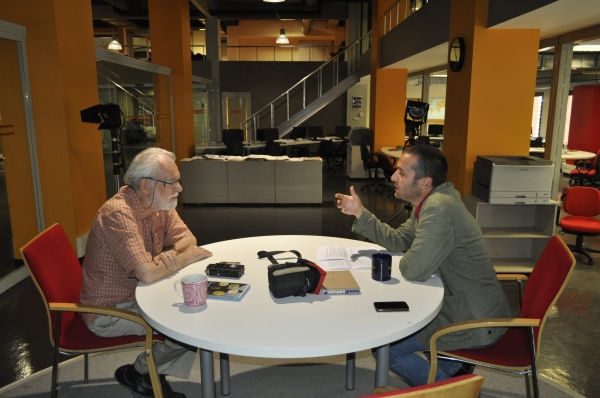
      Assistant Prof. Altug Akin from Faculty of Communication at IUE had a chance to interview Prof. David Harvey, one of the most influential social scientist of the world, who was at Izmir University of Economics for the workshop.

      Assistant Prof. Altug Akin: Let’s begin our talk with the workshop that you attended in our university. How did you like the workshop?

      David Harvey: It’s been hard to digest all the contribution so far. People come to this type of events with diverse opinions and very different intellectual backgrounds. You try and find a fusion of ideas. So it has been very helpful for me to see what the other have to say and try to put it into your sense.

      Altug Akin: All of the people who attended the workshop are academics. I would like to know more about your personal experiences of being in the academia more than half a century. What are the major transformations you have witness in the higher education realm?

      David Harvey: There have been some radical transformations about how the academics work and how they live. For instance communication is much easier now. In 1960s to cross the Atlantic, it took five days on a boat. So visits abroad were very infrequent.  We did not travel much and we basically stayed at home. This, by the way, had some virtues: we were more active in the governance of our own institutions and localities. So being confined in a base meant that we were really active in that base in various ways.

      Mobility, communication and academia
      In 1970s, the movement was much frequent, and now we came to a point that I travel so much that I sometimes wonder if I have a base at all.

      Altug Akin: Indeed you move around a lot: Last week you were in Amsterdam, now you are in Izmir and you will be in Chile soon. Thanks to this you are in touch with students from all around the world.

      David Harvey: Yes, that’s true, there is a very communicated network. I have a web site (www.davidharvey.org) which is frequently visited. And this is a part of the transformation. So on the one hand, it means that knowledge is much more diffused around the world. It’s possible to go place, but of course you should watch what kind of places you go to. There is a Hilton-hotel-conference circuit where you could circulate the world without realizing what kind of world you are in. I always have contacts in the places that I go where they take to around the city to make me see local events, tastes and lives. For me this is a fantastic learning experience.  I could spend a day or two in a Brazilian favela or in a protest movement in Diyarbakır. I value that possibility a lot. But my academic colleagues sometimes do not concern themselves with that. But then you feel like a globalized commodity.

      Distant education and satellite campuses
      Altug Akin: Two of the most recent trends we observe in higher education are related to space, your field of expertise: Distant or internet based learning, MOOCs and birth of satellite campuses of reputable universities in places like Dubai or Hong Kong.  How do you see these trends?

      David Harvey: Of course, education has become a commodity. In many parts of the world, there are actors who are busy with selling educational services, which can mean establishing campuses in Dubai or Singapore etc.  as well as opening up campuses in New York, London or Sydney for educating people from abroad via masters class and like. Like all of these things, it is a double edged sword. I am not convinced that distant learning or MOOC classes are going to take over; rather they will play a subsidiary role to face-to-face education. There is evidence right now that a quarter of a million people can enrol in an online class, and you would be lucky if five thousand people complete it.

      What really worries me, however, is that the big institutions are going to use their reputation to dominate those MOOC markets. And we are going to see significant financial pressure on many higher education institutions in the second rank. This worries me in the sense that, MOOC seems to be a decentralizing platform which may centralize what the message is. If the only courses you can get are from Yale, Princeton and Harvard, you are going to get an orthodoxy which is going to bring the monopolization of knowledge. So it should be decentralized and it should be free. Only then, we can talk about a positive potential of these techniques. But it should not be forgotten that the big capital seeks ways to commodity and monopolize the nature of the knowledge that is available to the people.

      Teaching Marx from distance

      Altug Akin: Actually, you are a part of distance learning realm with your online course “Reading Karl Marx’s Capital with David Harvey” (https://davidharvey.org/reading-capital/).  You have lots of followers on this page.

      David Harvey: Yes, it is true. My course is, of course, free. I do not make final exams or give home works. And people who watch the videos do not get any sort of accreditation. But still quite a lot of people follow the video. I hope that some of them learn more about Marx and the Capital. But of course I do not have a tool t measure how much they learn. Time will tell the outcomes.

      Finally, let’s talk about the institution you work for: City University of New York (CUNY).
      Our university has a tradition of public service. It’s a state university and it was tuition-free until crisis of 1970s forced us to charge tuition. It is a public university with a public mission and it is largely mass education for an immigrant population, a very diverse immigrant population.

      During the 1930s for instance, CUNY had an incredible reputation as a place where immigrants right of the boat coming and going to college. During this period, CUNY educated more Nobel Prize winners than Harvard, Yale and those places. Since 1945, there has been a defunding of the public university and with an emphasis of supporting education in Columbia and NYU. So we have been the poor. But we still have the same public mission. And it has a good record of creating opportunities for the people who otherwise could not have it.  

      “The results of the discussions will be edited in a volume”

      The organizer of the workshop, Professor Turan Subaşat from economics department of Izmir University of Economics, on the workshop:

      “While the 2008 global crisis continues to affect the economies of rich countries, some of the most influential political economists got together in Izmir to discuss about its causes. While there is no agreement amongst economists regarding the causes of crisis, a striking difference exists between the mainstream economists who focuses on policy mistakes and human nature (such as greed) and political economists who focus on the systemic (such as declining profit rates), conjunctural (such as oil price increases) and policy-created (deregulation of markets) causes.

      A four day workshop held in the Izmir University of Economics brought together 15 researchers some of which are the most renowned political economists such as David Harvey, Ben Fine, John Weeks, Anwar Shaikh, Simon Mohun, David Kotz, Alan Freeman, Al Campbell and Riccardo Bellofiore. The results of the discussions will be edited in a volume which will be published by the Edward Elgar.“
      DAVID HARVEY HONORED IZMIR UNIVERSITY OF ECONOMICS
      DAVID HARVEY HONORED IZMIR UNIVERSITY OF ECONOMICS
      DAVID HARVEY HONORED IZMIR UNIVERSITY OF ECONOMICS
      DAVID HARVEY HONORED IZMIR UNIVERSITY OF ECONOMICS
      • NEWS & ANNOUCEMENTS & EVENTS

        • News
        • Annoucements
        • Events

      NEWSALL NEWS

      From Past to Future: A Special Collection
      From Past to Future: A Special Collection

      Senior students from the Department of Textile and Fashion Design, Izmir University of Economics (IUE) have created a special collection ...

      Related SDG:
      4
      9
      12
      Detail
      • WhatsApp
      • Linkedin
      • Twitter
      • Facebook
      Great Opportunity for Entrepreneurs
      Great Opportunity for Entrepreneurs

      The initiative named BiGG.ASSIST, established through the collaboration of Izmir University of Economics (IUE), Technopark Izmir, and Inci Holding, has ...

      Related SDG:
      9
      10
      17
      Detail
      • WhatsApp
      • Linkedin
      • Twitter
      • Facebook
      Hand in Hand for Children
      Hand in Hand for Children

      Izmir University of Economics (IUE) and Karşıyaka Municipality have established an exemplary collaboration to support the development of preschool-age children, ...

      Related SDG:
      4
      10
      12
      17
      Detail
      • WhatsApp
      • Linkedin
      • Twitter
      • Facebook
      Accreditation to the Education Quality
      Accreditation to the Education Quality

      At Izmir University of Economics (IUE), which has strengthened its technological infrastructure, curriculum, and academic staff with the aim of ...

      Related SDG:
      4
      8
      17
      Detail
      • WhatsApp
      • Linkedin
      • Twitter
      • Facebook
      The Second 'AI in Education' Workshop Was Successfully Held
      The Second 'AI in Education' Workshop Was Successfully Held

      Izmir University of Economics continues its efforts to promote the effective use of artificial intelligence tools in teaching and learning ...

      Related SDG:
      4
      9
      12
      Detail
      • WhatsApp
      • Linkedin
      • Twitter
      • Facebook
      A Strong Step for the Climate
      A Strong Step for the Climate

      Izmir University of Economics (IUE) has reached the top rankings in Turkey through its projects and international collaborations aimed at ...

      Related SDG:
      3
      4
      6
      7
      13
      17
      Detail
      • WhatsApp
      • Linkedin
      • Twitter
      • Facebook
      ‘New Year’ Cookies from Little Chefs
      ‘New Year’ Cookies from Little Chefs

      Students of the Izmir University of Economics (IUE) Children's University Beyaz Köşk Kindergarten experienced the joy of the New Year ...

      Related SDG:
      3
      4
      10
      17
      Detail
      • WhatsApp
      • Linkedin
      • Twitter
      • Facebook
      A ‘Peak’ Award in a 53-Year Scientific Journey
      A ‘Peak’ Award in a 53-Year Scientific Journey

      Prof. Dr. Canan Başar, a faculty member of the Department of Psychology at Izmir University of Economics (IUE), has received ...

      Related SDG:
      4
      8
      17
      Detail
      • WhatsApp
      • Linkedin
      • Twitter
      • Facebook

      GLOBAL CAREER

      As Izmir University of Economics transforms into a world-class university, it also raises successful young people with global competence.

      More..

      CONTRIBUTION TO SCIENCE

      Izmir University of Economics produces qualified knowledge and competent technologies.

      More..

      VALUING PEOPLE

      Izmir University of Economics sees producing social benefit as its reason for existence.

      More..

      BENEFIT TO SOCIETY

      Transferring 22 years of power and experience to social work…

      More..

      IZMIR UNIVERSITY OF ECONOMICS GÜZELBAHÇE CAMPUS

      Details
      Önce araştır sonra tercih et
      Zirveye giden yolda yanınızdayız
      İEÜ Öğrenci Kulüpleri Başkanları’ndan Mesaj Var!
      4 yıl nasıl geçer?
      Izmir University of Economics
      is an establishment of
      izto logo
      Izmir Chamber of Commerce Health and Education Foundation.
      ito vakfı logo
      Logo

      İzmir Ekonomi Üniversitesi
      Sakarya Caddesi No:156
      35330 Balçova - İzmir / TÜRKİYE

      kampus İzmir

      • University
      • LIFE at IUE
      • CAMPUS LIFE
      • UNIVERSITY IS LIVED IN IZMIR
      • PATENTS
      • CampusIzmir
      • STUDIOS AND LABORATORIES
      • Technology Transfer Office
      • Library
      • Career Guidance Centre
      • Children's University
      • Contact

      İEU © All rights reserved.

      İEU